



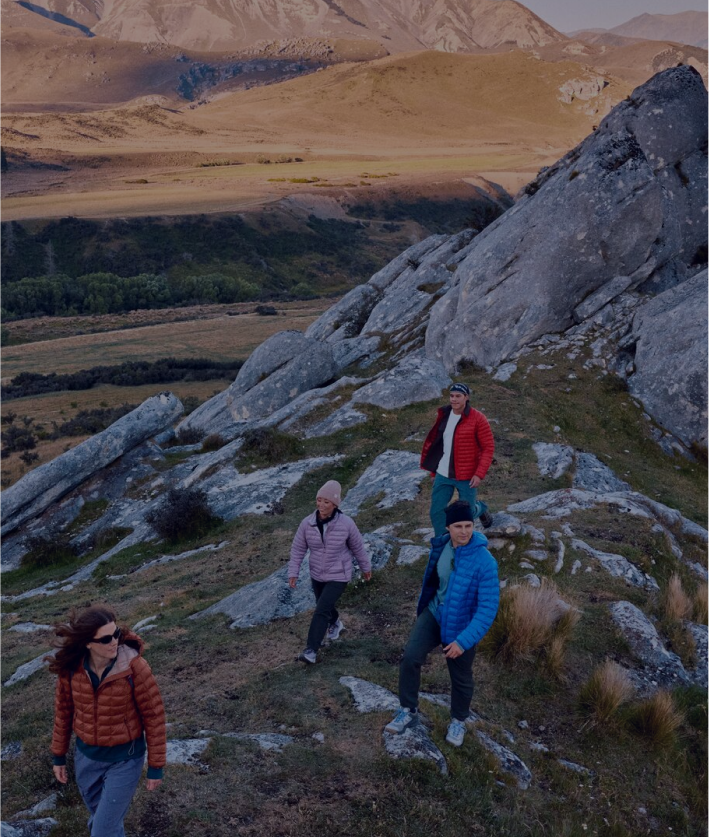

How to choose hiking pants
Anyone who’s done a long day in the wrong pants knows the feeling: damp fabric clinging to your thighs, a waistband that slides, a seam that rubs by the second hour. Good hiking pants don’t get noticed, because you forget you’re wearing them.
Whether you call it hiking or tramping, here’s how to find a pair that suits your trail, from a Sunday loop to a multi-day push through changeable alpine weather.
What should I think about before buying hiking pants?
Before you look at fabrics or features, think about three things.
How far and how often? A couple of easy walks a month calls for something comfortable and versatile. Regular day hikes or overnighters call for more durability and technical detail.
What’s the weather likely to do? New Zealand is the home of four seasons in one day, so even a sunny forecast can turn. Think about sun, scrub, wind and rain.
How much will you be moving? Scrambling over roots, stepping up onto rocks and crouching to tie a boot all put different demands on a pair of pants than strolling a boardwalk does.
Your answers point to one of three levels of hiking pant. We’ve built ours around exactly that: Trailhead, Ridge and XT Series.

What should I look for in hiking pants?
Fabric
Look for lightweight synthetics, usually nylon or polyester blended with a little elastane. They’re breathable, quick-drying and tough, and they handle sweat far better than cotton, which holds moisture and takes forever to dry. Two extras are worth having in New Zealand and Australia:
- UPF 50+ fabric. Our UV is strong, and you’ll feel it on exposed ridgelines and open tussock.
- A DWR finish. Durable Water Repellent (DWR) finish makes light rain and wet scrub bead off. It’s not waterproofing, but it keeps you comfortable until you need a proper shell.
Stretch and movement
Look for stretch fabric and articulated knees (pre-shaped panels that bend with you). They’re the difference between pants that fight every step-up and pants that go with it.
Fit and waist
Aim for a fit that’s comfortable without bagginess that snags on branches. A secure waist matters more than you’d think once you add a pack hip belt, so look for an adjustable waist or a belt.
Pockets
Zipped pockets are non-negotiable if you carry a phone, keys or a map. Nobody wants to watch their car key bounce down a gully.
Hems and length
An adjustable or zip hem lets you cinch the cuff against scrub and mud, or ease it over boots.
Should I wear hiking pants, shorts or convertibles?
- Pants protect your legs from sun, scratchy scrub, insects and cold. They’re the all-rounder for most New Zealand tracks. Browse our range of men’s hiking pants and women’s hiking pants.
- Shorts suit hot, well-formed trails where airflow matters most.
- Convertibles zip off into shorts, which makes them ideal for changeable days, especially on longer trips where a frosty morning becomes a hot climb by lunchtime.

Are hiking pants waterproof?
Most aren’t. Hiking pants like Trailhead and Ridge have a DWR finish that sheds light rain and water droplets from damp scrub, which makes them water-resistant, but not waterproof. For sustained rain, you’ll want a waterproof layer over the top, and for multi-day tramping that’s worth carrying even when the forecast looks kind. Browse our range of rain pants.
Which Kathmandu hiking pants are right for me?
Trailhead: for new and occasional hikers
Trailhead is where most people should start. It’s comfortable, practical and easy to wear on the trail and off it, which is handy when you want pants that earn their keep beyond hiking days.
The Men’s Trailhead Pants have 2-way stretch fabric, UPF 50+ sun protection, a PFAS-free DWR finish and moisture-wicking performance. The secure zipped pocket keeps small essentials safe, and the webbing belt and hem adjuster let you fine-tune the fit. They weigh just 300 g. Browse the full Trailhead range for women’s and men’s pants and convertibles.
Good for: day walks, weekend trips, first-time hikers.
Ridge: for regular hikers stepping things up
Once you’re hiking regularly and tackling longer or rougher days, Ridge is the natural step up. It’s a long-time favourite, with four-way stretch for scrambling and stream crossings, UPF 50+ protection and articulated knees. The fabric contains 88% recycled nylon.
- Men’s Ridge Pants have two zip side pockets, a zip leg pocket and a regular fit.
- Women’s Ridge Pants are lightweight and comfortable, with the same zipped storage and articulated knees.
- Women’s Ridge Convertible Pants zip off into shorts, perfect for the day that starts frosty and finishes hot.
Good for: multi-day tramping trips, off-track scrambling, and hikers who want one dependable pair they can wear again and again.

XT Series: for experienced hikers and serious conditions
XT is Kathmandu’s most advanced hiking system, designed for people who know exactly what they need when the weather turns. For waterproof protection for your lower half, that means the XT Series Cordura 3L Rain Pant.
It’s a three-layer, fully seam-sealed shell built from 100% recycled CORDURA® nylon, rated to 20,000 mm waterproofing with breathability up to 35,000 g/m²/24 hr and no intentionally added PFAS. Lower-leg zips make it easy to pull on over boots, and it packs small enough to forget about until you need it. Wear it over a pair of Ridge pants and you’ve got a setup that handles serious weather.
Good for: alpine and exposed terrain, long days in wet weather, fast-and-light missions.
Quick tips before you buy
- Try them with your boots and a pack on. Squat, step up high and check nothing pulls or slides. Not sure on footwear? Read our guide to hiking boots vs shoes.
- Think in layers. Pants are your base layer for the legs, with a waterproof shell on top when the weather turns. Our summer hike guide covers the rest of the outfit.
- Wash them properly. Following the care label keeps the DWR finish working for longer.
New to all this? Start with our Beginner’s Guide to Hiking.
Hiking pants FAQs
Do I need rain pants for tramping in NZ?
For multi-day trips, or anywhere with unpredictable weather, yes. They add very little weight, and wet legs are a fast way to get cold.
Can I wear leggings or jeans hiking?
Leggings work on easy, dry tracks, but they offer less protection from scrub and weather and usually have fewer pockets. Jeans are best avoided because denim is heavy, restrictive and slow to dry.
What’s the difference between hiking pants and softshell pants?
Softshell describes the stretchy, wind- and water-resistant fabric. Hiking pants describe what they’re for. Plenty of technical hiking pants use softshell-type fabric.
What should hiking pants be made of?
Lightweight nylon or polyester with a bit of stretch. They’re quick-drying and breathable, unlike cotton.
The bottom line
The best hiking pants match your trail, your climate and your pace. Start with Trailhead if you’re new, step up to Ridge when you’re walking further and more often, and add XT when conditions get serious. Whichever you choose, your legs will thank you at the end of the day.
Related Articles

How to choose sun protection clothing: The ultimate UPF 50+ buyer’s guide
5 minute read

How to dress your kids for a day hike
3 minute read

Hiking Boots vs Shoes: Which should you choose?
5 minute read

How to clean and store a tent
7 minute read
How to choose sun protection clothing: The ultimate UPF 50+ buyer’s guide
5 minute read
How to dress your kids for a day hike
3 minute read
Hiking Boots vs Shoes: Which should you choose?
5 minute read
How to clean and store a tent
7 minute read