



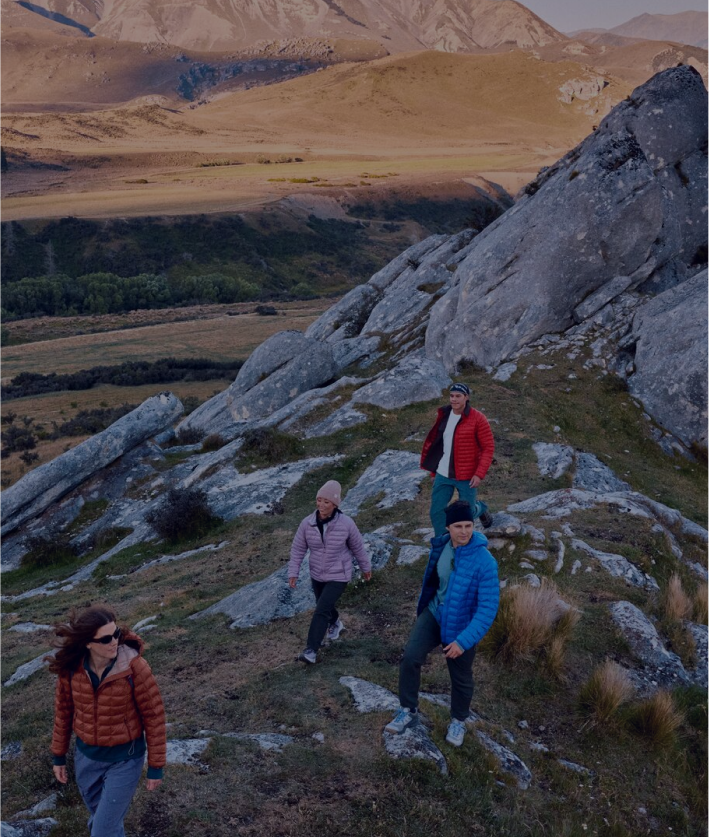

There is nothing like the feeling of a summer hike. The longer days, the warmer air, the pull to get outside and make the most of every golden hour. Here's how to dress for a summer hike.
The short version
- Top: a light long sleeve rated UPF 50+
- Bottoms: shorts for easy tracks, light pants for scrub and sun.
- Socks: merino
- Sun kit: UPF clothing for what's covered, then a wide-brimmed hat, sunglasses and sunscreen for what isn't covered.
- Just in case: a packable rain jacket.
What to look for in the fabric?
On a hot day, fabric does most of the work. A few things worth knowing before you shop:
- Synthetics (nylon and polyester): light, breathable, quick drying, and tough.
- Moisture wicking: moves sweat away from your skin so it can evaporate, rather than sit on you.
- UPF 50+: sun protection built into the fabric itself. We'll get into the detail below.
- Ventilation panels: hidden mesh or zips that open up for airflow when it's properly hot.
UPF explained

Kathmandu's UPF 50+ sun protection clothing helps protect against UV rays, giving you the freedom to explore more of the outdoors. Aotearoa and Australia get some of the highest UV levels in the world, so it's worth knowing how it works. UPF stands for Ultraviolet Protection Factor, and it rates how much UV a fabric lets through. It covers both UVA and UVB rays, which damage skin cells at a DNA level and add to your skin cancer risk.
What the numbers mean?
- Everyday cotton tee: around UPF 5.
- UPF 30-49: very good protection.
- UPF 50+: the top tier. It blocks about 98% of UV, letting through around 2%. At Kathmandu, a fabric has to hit UPF 50+ before it earns a UPF claim, so there's one rating to look for across the range.
How fabric does it
Protection comes down to weave, fibre and sometimes treatment. A tighter weave leaves less room for UV to sneak through.
It's the garment, not just the fabric
A fabric can pass every lab test and still not earn a UPF claim as a finished garment. Sleeve length, neckline and overall coverage all count. So a UPF claim on one of our products means the fabric has been independently lab tested, the garment is designed with real body coverage in mind, and it delivers UPF 50+ across the skin it covers.
UPF vs sunscreen: do you need both?
Short answer: yes. They do different jobs.
UPF is for fabric. SPF is for sunscreen.
- Covered skin: if it's under a UPF 50+ garment, you don't need sunscreen there. The fabric is doing the job, and you never have to stop and reapply.
- Exposed skin: face, ears, neck, hands and anywhere else the clothes don't reach still need sunscreen. UPF only protects what it covers.
What to wear?

1. A breathable long-sleeve top
It feels counterintuitive, but a light long sleeve is often cooler than a singlet in strong sun, and it saves you reapplying sunscreen to your arms every hour.
- UPF 50+ tops: the SUN-Stopper LT Long Sleeve Top is a lightweight, breathable layer that's easy to throw on. Want more coverage around your neck? The SUN-Stopper LT Hoodie adds a three-panel hood and cowl-neck opening. Browse the SUN-Stopper range.
- Merino tops: soft, breathable and naturally temperature-regulating. Shop merino.
2. Shorts or pants
- Hiking shorts: light, quick-drying and ideal for formed tracks. If you're mixing walking with a bit of running, go for a pair with a mesh inner like driMOTION shorts. Shop hiking shorts and pants.
- Lightweight pants: the better pick for scratchy scrub, overgrown tracks, or if you burn easily. UPF 50+ options like the Trailhead Pants (with matching shorts) or the Men's Ridge Pants give you stretch, quick-dry comfort and sun protection in one.
3. Breathable socks
Merino wool socks regulate temperature and keep blisters at bay. Cotton traps moisture, so leave it at home. Seamless pairs are worth it for multi-day trips or sensitive feet. Shop hiking socks.
4. A wide-brimmed hat
Your face, ears and neck are easy to overlook when you're sorting sunscreen at the door. A UPF hat adds another layer of coverage and keeps things simple. The Trailhead UPF50+ Wide Brim Hat is made from lightweight recycled ripstop, with a toggled chin strap to keep it on when you're moving. Shop sun hats.
5. A day pack with a ventilated back
Choose a harness that lets air move between you and your pack. For day walks, 25-30L is about right. Shop day packs.
What to pack
- Water: a 2L bladder or equivalent as a minimum. Shop bottles and bladders.
- Sunscreen: SPF 50+, broad-spectrum, for every bit of skin your clothes don't cover. Apply before you start and reapply through the day.
- Sunglasses: polarised lenses that block UVA and UVB.
- Electrolytes: hot days mean a lot of sweat. Oral rehydration salts help you replace what you lose.
- First-aid kit: you'll be glad it's there, and happier if you never open it. Shop first aid.
- Walking poles: save your energy and go easier on your knees on the downhills. Shop hiking poles.
- Rain jacket: pack a lightweight one even when the forecast looks perfect. Shop hiking rain jackets.
- Not sure what else belongs in your pack? Our day hike checklist covers it.
- With the right gear and a bit of planning, you can say yes to the hike, the ridge, the detour and the extra kilometer.
Want more information on sun protection? Read What is UPF clothing and why do you need it? and UPF Clothing vs Sunscreen: Do You Need Both?.
Related Articles

What is UPF clothing and why do you need it?
4 minute read

What to Pack for a Day Hike: The Complete Checklist
There's a certain feeling that comes with a hike day. The gear laid out the night before. Boots by the door. That thrill of knowing you're about to spend a whole day outside. Getting your pack right is part of that.
4 minute read

Meeting the Designers behind the XT Series.
4 minute read

Find your hiking level: choosing the right hiking jacket
6 minute read
What is UPF clothing and why do you need it?
4 minute read
What to Pack for a Day Hike: The Complete Checklist
There's a certain feeling that comes with a hike day. The gear laid out the night before. Boots by the door. That thrill of knowing you're about to spend a whole day outside. Getting your pack right is part of that.
4 minute read
Meeting the Designers behind the XT Series.
4 minute read
Find your hiking level: choosing the right hiking jacket
6 minute read